
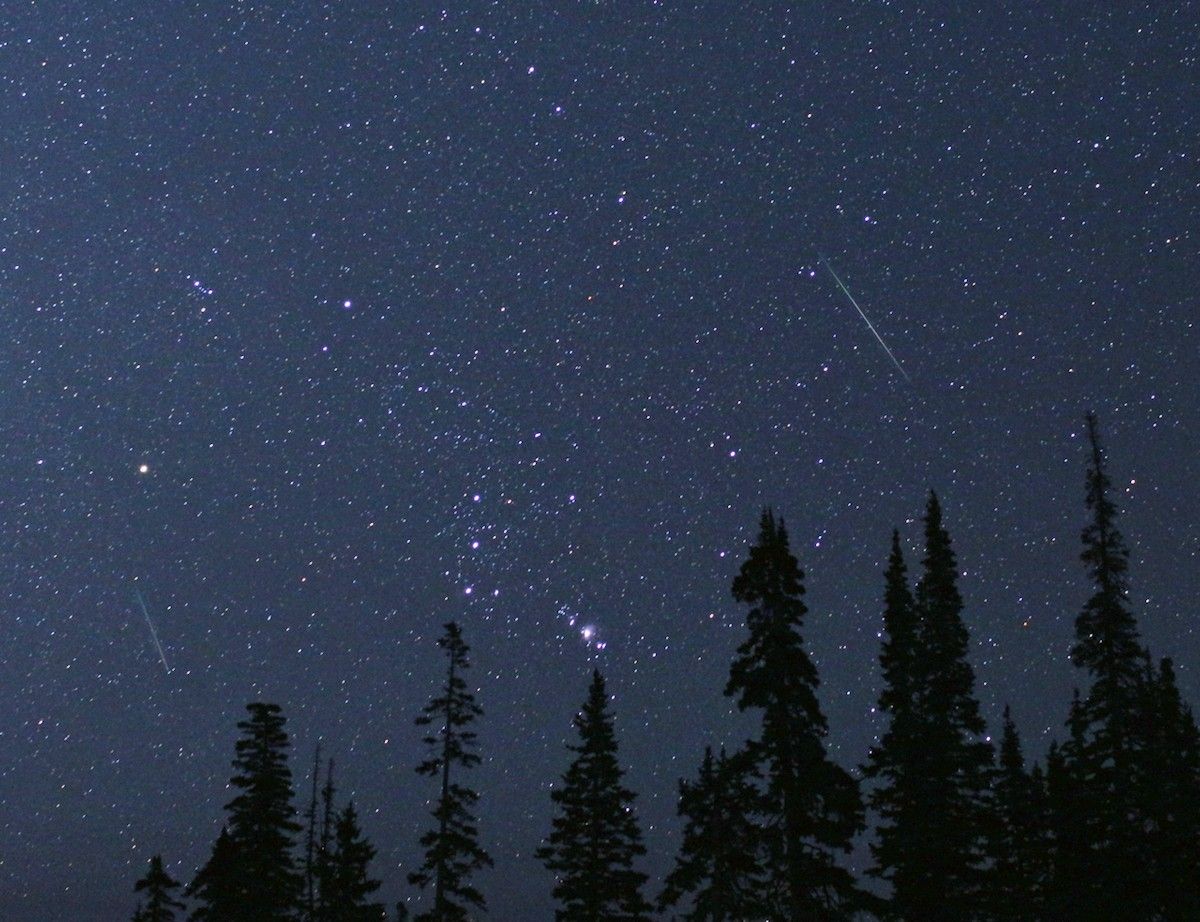
The Perseid meteor shower was expected to reach its peak the night of Aug. 12 into the early morning of Aug. 13, according to NASA. The agency said visibility should be ideal this year because the new moon phase would keep skies dark, and the shower can produce as many as 50 to 100 meteors an hour when viewing conditions are right.
NASA’s viewing advice is simple: find a spot with dark skies, give your eyes 20 to 30 minutes to adjust, and look up. The meteors appear to radiate from the constellation Perseus in the northern sky, but they can show up anywhere overhead. The Perseids are known for fireballs — exceptionally bright meteors that leave a glowing trail.
NASA also livestreamed a meteor watch party on YouTube from its Marshall Space Flight Center observatory, with live sky views and meteor experts through the night.